VISUAL STUDY LAB · TONGUE
Tongue anatomy
Study tongue movement, surface landmarks, and the nerves for sensation, taste, and motor control together in one place.
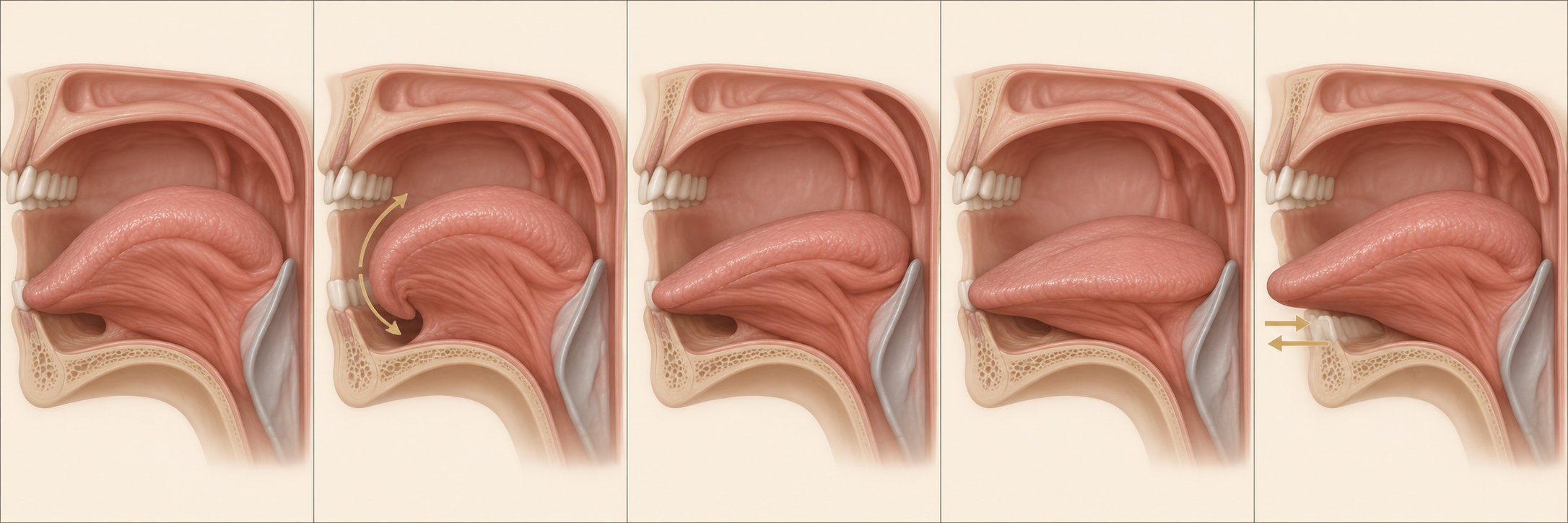
These muscles lie within the tongue and change its shape.
- Origin
- Insertion
- Attachment path
- Action
- Memory cue
Origin is usually the more fixed attachment; insertion is usually more movable. Facial muscle insertions often blend into skin. Pointer dot marks the muscle location; motor supply is facial nerve (CN VII).
STEP 1 · REST
Tongue at rest
The tongue has a body, root and apex. Intrinsic muscles change its shape; extrinsic muscles move it.
LocationOral cavity · tongue body and apex
FunctionPositions food for chewing, swallowing and speech.
Facial expression overview
Facial expression muscles are reviewed by region—scalp, eye and mouth—and often work in combinations.
Page objectives: identify facial expression muscles by region, origin, insertion and action; describe their blood and nerve supply; explain buccinator’s role in mastication.
Reading: See the course text sections on facial expression muscles.
Labeled structures
Choose a label to see its location and function.
STEP 1 · ORIENT
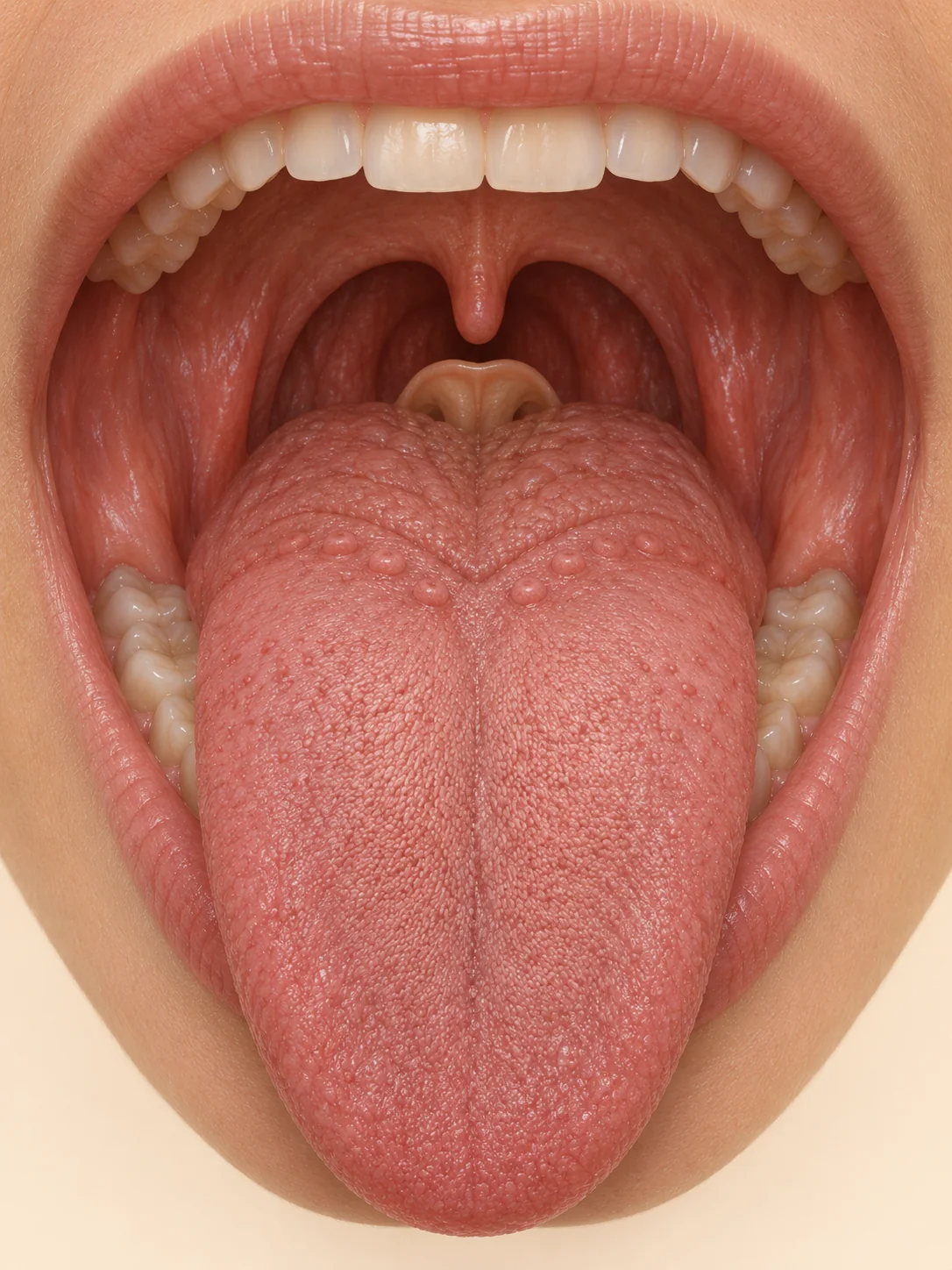
Find the tongue regions
The sulcus terminalis and V-shaped row of circumvallate papillae mark the boundary: anterior two-thirds (body) in front, posterior one-third (root) behind.
Exam cue: Taste and general sensation use different nerves on the anterior tongue.
Colored overlays show nerve territories and simplified teaching routes. Chorda tympani (VII) joins the lingual nerve (V3); palatoglossus is supplied by CN X, while most other tongue muscles are supplied by CN XII.
Use the three tongue views together: movement, anterior surface landmarks, then nerve pathways.